
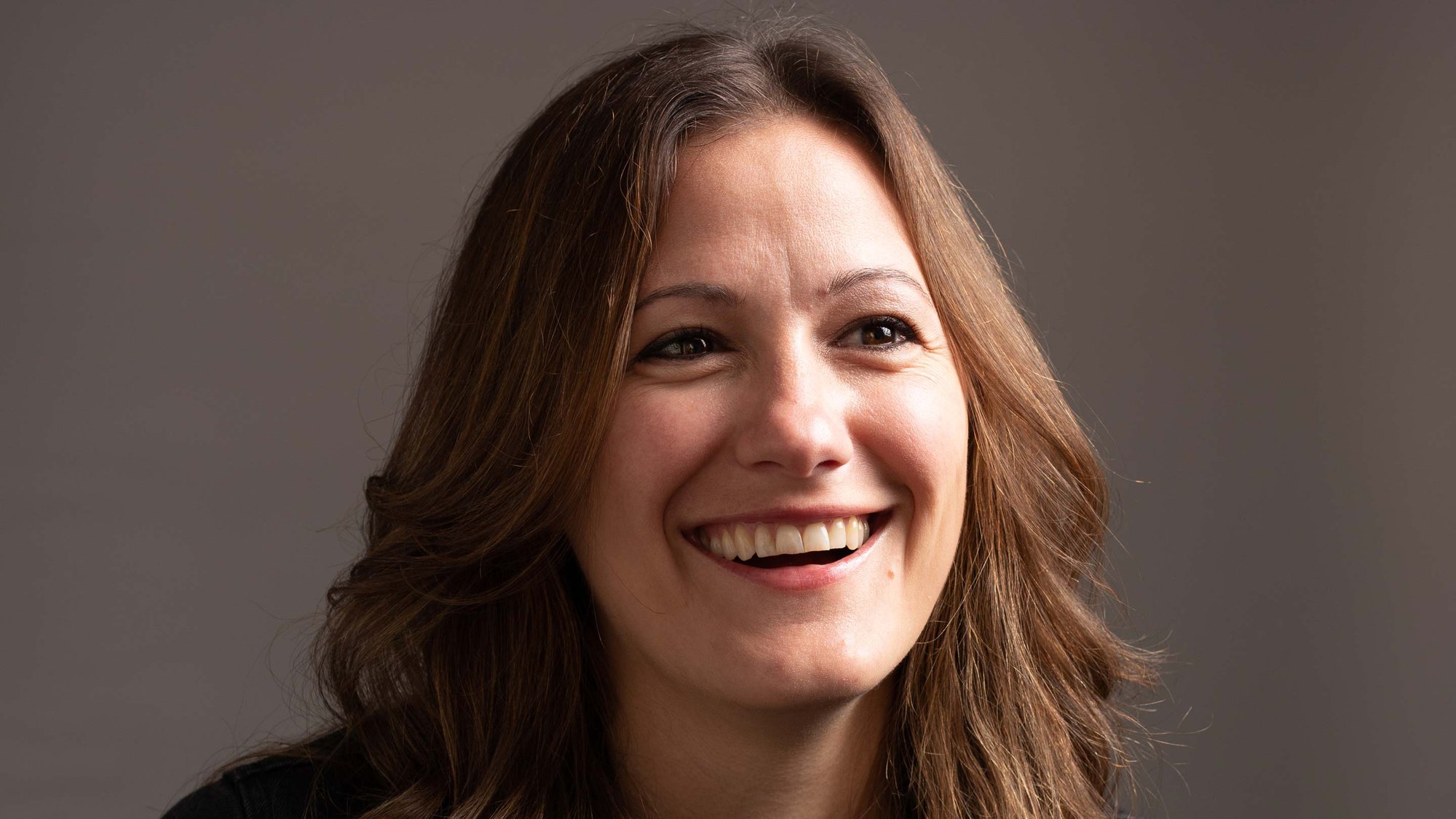
In this installment of our new CEO Chronicles series, I sit down with David Blasher, Executive Director at the MAP Fund, to speak about the unique challenges and opportunities of interim leadership. Both of us have navigated interim roles at our respective organizations and share what we've learned about building trust, managing uncertainty, and supporting organizational transitions. Give it a listen and let us know what questions you have for Blasher (or myself) in the comments 💬

Finding Your Way to Interim Leadership
Theresa: Blasher, we met when I had just finished my interim leadership year at Fractured Atlas and you had begun yours at the MAP Fund. Can you describe your journey to interim leadership?
Blasher: My journey into the Interim Executive Director role at the MAP Fund was fairly organic. I have a background as an attorney, so before the MAP Fund, I was working in a role that brought together technology and law and professional development. I had met Moira Brennan, the former Executive Director of the MAP Fund several years before, and we talked about ways that I might get involved with MAP. In 2020, Moira invited me in on a contractor basis to help operationalize our coaching program at MAP, which is called SPA, Scaffolding for Practicing Artists. That turned into a role that involved advising Moira and being a thought partner with her. I had experience as the board chair for another nonprofit, so I had a lot of experience with advising an executive director. When she announced that she was going to be stepping down after 20 years with the organization, she invited me into the interim role, which I really didn't know what this would involve exactly. How can I fill the shoes? Will the team trust me? At that point, I had been working at least on a part-time basis with everyone on the team for the last few years. I'd gotten to know the culture, the people, the processes, albeit a little bit from a distance, kind of on the margin. So this was a way to dive into all the things that I didn't know would be involved in interim leadership.
Theresa: It's so challenging to really think about how much trust you need, maybe even more trust when you're an interim leader than if you are a person who's going to be there long-term and have the time to develop that trust and determine what culture you want to build for the future. Even though I had been at Fractured Atlas for quite a long time, the minute you change into a leadership position, that changes the relationship you have with everyone else. What was the hardest part of being an interim leader?

On Uncertainty and Change
Blasher: The hardest part for me is the same thing that is maybe hard in life, which is my relationship with uncertainty, with not knowing. And I often find that my relationship with uncertainty says a lot in the moment about my relationship with being alive. If my relationship with uncertainty is, "figure it out, fix it, solve it, control it, organize it," that says something. If my relationship with uncertainty is, "where's curiosity? Is this an adventure? Is there some fun? How can we connect?" that says something different. And so I think not knowing what's been done before by the executive director or by the organization, how are people feeling about this new role that I'm in? How are they feeling about the uncertainty that the organization is heading into? Because that's inherently what's happening — there's a shift happening not just in my role, but for everybody. There's an opportunity for a lot of movement. And I thought about the idea of a ferryman helping to move people across a body of water. So a big hard part for me was like, what's changing? What are we bringing with us? Both in practices, values, protocols and feeling like there wasn't a lot of time to make those determinations or to prioritize.
Theresa: We were going to be doing a search for an executive after my interim year. And my goal for that year was to plant some seeds in the culture space, the culture of the organization, which was quite fractured at the time I took over, and have a more fertile growing space for the new leader to take on and do what they wanted to do.
Blasher: Did you have a sense from maybe your board or other leaders within the organization at Fractured Atlas of how to structure that year of your interim period?

Building Trust
and Culture
Theresa: The Board essentially said to me, keep the trains moving. And I took that seriously and also recognized that Fractured Atlas building so much around the Fiscal Sponsorship Program, which is a sustainable program, meant that keeping the wheels running wasn't necessarily going to demand all of my time. So I went through and I talked to every department. I tried to really understand what some concerns were that they were taking with them from previous leadership into the next to determine some things we could work on in the meantime. And I think that was where planting that trust seed came from. I had the benefit of knowing everybody so they could have been more open with me. Because I was there with them experiencing some of these concerns that they're bringing forth. But after that, I got to the point where I just said, we need somebody else to come in. We need a consultant to come in to help us work on our culture. It was not something that I could do on my own, especially since that dynamic shift meant that I was going to lose a lot of trust because people are inherently distrustful of leaders. It's not like you can fix trust and fix a culture in one year. It is constantly evolving. Staff is constantly turning over. It's something that you have to continue maintaining just like a garden, just like a farm. You can't just set it and leave it and expect it to grow.
Blasher: There's pruning that will happen. Attempts at transplanting that may or may not work. At MAP, we did something really beautiful at the very end of our former executive director Moira Brennan's tenure that fall. Sharon Bridgforth, a great friend of MAP Fund and one of our SPA coaches, led a two-day workshop where on the first day we did a bunch of performance exercises to thank Moira, and we did a group dance. And on the second day we met without Moira and brought images and stories and objects and created some different art pieces together to kind of build this new thing together. We had a ceremony to all cross through the threshold and the portal together. And Sharon, who co-facilitated this workshop with Omi Jones over two days, was somebody who was very well prepared to bring kindness and care and thought and structure to the group. That was helpful. To actually have somebody else, have a different leader, in a sense, helping to transfer things.
Theresa: I love the question, should someone else do this? Because sometimes we as leaders are sort of expected to be able to solve every single problem. And we being human and having our own sets of experiences aren't going to be experts in everything. But what we can be experts in is getting the help that we need in order to nurture a solution to something or balance out what we do have our own expertise in. It's not going to be helpful for the executive or for a board member or somebody to stand up and say, "let's fix the culture" or "this is what I think, this is my vision for the culture." It requires so much participation from everybody that it needs to be built together. And that can be facilitated and sometimes is best facilitated by somebody who's outside of the organization.
Blasher: Particularly in these times where we're dealing with such turbulence and fear and menacing, mendacious, messy shifts and changes, violence. There's a practice to not knowing. Not knowing can actually be really important. It's certainly really important for the artistic process to have the things that you do know. You have an impulse, you have curiosity, you have an artistic vision. You need to experiment, you need to figure out what kinds of containers will allow you to try and be in a place of curiosity. There's a line that my friend Dee Henry reminds me: Don't worry alone. I forget this all the time. So that's why I say it to remind myself. Have your teams. Who are the people that you turn to for financial questions? Where's your coach? Where is your emotional support? Where are your spiritual nourishments? Who are the people that you can turn to for help? Because it's too much to try to pretend that you could do it on your own.

Advice for
Interim Leaders
Theresa: What advice might you give to somebody currently in interim leadership position, or maybe somebody entering into an interim leadership position?
Blasher: Ask for help, get a coach if you can, or some other kind of support. If there is a search for an executive happening, it may be helpful to get some advice from that recruiting team because they have a lot of experience working with interims. Listening continues to be something that feels important to practice. Making room and space for listening to staff, whether it's in group conversations with the staff or sometimes more importantly, in one-on-ones. You need to establish where people are, and how can you support them? Setting up clear expectations around the scope of the work that you're all trying to do and being able to benefit from the expertise that they already have. And also being able to take the time to listen to yourself. You don't have to necessarily resolve or fix or clean up, but sometimes acknowledge that something is sticky.
Theresa: I think if you're an interim leader, whether you've been a leader in the past and you're doing this interim stint, or this is your first time in leadership, you can't get rid of that listening piece. You're never going to stop using it as a leader.
Blasher: And as you mentioned, you're not sure in this interim role, how far forward you're planning your planting seeds. It may not be time to work on that project, but let's keep thinking about what it could be. Let's keep dreaming about it. At MAP Fund, in the time that I was in the interim role, we were getting whispers that we may be facing some major funding cuts from our major partners. So that was also a really challenging thing in terms of stacking on top of the chasm of uncertainty. What is happening, what's the future, what can we plan for right now? And sometimes when things are almost overwhelmingly unclear and uncertain, I've found sometimes it's so overwhelming that it brings relief. Like, okay, so what can we work on? What can we be with here? Because when you're trying to plan out things that others haven't even decided yet and you're relying on them, it can make you lose it.
Theresa: My coach will ask me, "What are you uniquely qualified to do?" Because if you're not uniquely qualified to do it, then it can be delegated or somebody else can pick up that charge and move forward with it. What advice would you give to an institution who's going through a leadership transition using interim leadership?

Supporting Organizational Transitions
Blasher: The relationship component sticks out again, in terms of the board and or friends of the organization being able to create relationships and strengthen relationships with the staff so that there's more neighborhood around the organization. More neighbors around, people that you can turn to.
Theresa: Naming the challenges is something that we as humans are almost trained not to do. Even though we internally fester on them, we sit there and we say, "This is what I did wrong. These are the challenges. Where are they coming from? Am I messing up?" But if the board says, "This is the history, these are the things we've tried, these are challenges we've run into," that allows so much freedom for others in the organization to let it go and not hold so tightly onto the things that have been challenges in the past and might continue to be challenges in future.
Blasher: How do you answer this question as well? What is some advice that you give to an organization in an interim period?
Theresa: I think a lot of my advice would be to the board in particular. It's less about creating structures and more about letting the interim director and encouraging them to say what they need, and actually listening and actually providing that. My instinct was to not show that I could mess up or to not really say that I was learning. That was something I had to practice. I had to learn that. And I really think that the board is a presence that can help their leader develop that, especially if they encourage the leader to set their own boundaries and to say what it is that they need and clearly articulate it. If you're like me and having never been in that position before, have no idea what to ask for, the board really has a responsibility to ask for something specific, say "I can tell that you don't know what to ask for, here's a recommendation or here's a suggestion, or is this something that you need?" Or say, "This is something I can do. Would that be helpful?" I think that's a really clear indicator that the board is invested in the interim leader's success and not just seeing that person as merely a figure that's there for formality.
Blasher: I think many people have shared when maybe a family is in crisis or dealing with grief of the passing of a loved one, sometimes having somebody who means well come and say, "How can I help?" can be incredibly frustrating, and almost paralyzing at times. But if somebody says, "I'm making food, I know some of your dietary restrictions, I'm gonna drop it off at five, you don't have to say anything to me, it's gonna be there." Sometimes that can be helpful to have somebody offer something. And it also can be helpful to understand what's on your plate right now. "What are some of the things that you're tackling? What are you struggling with? What are you working on?"
Theresa: And if it's too much for them, invest in a coach.
Blasher: Get a coach, get as many coaches as you can.
Theresa: Yes, and ideally have it be institution funded.

Leaders Who Shape Us
Theresa: Do you have an example of a leader or a mentor or a guide who shaped your own leadership journey and how did they influence you?
Blasher: Particularly at my time at MAP Fund, there are two people that come to mind, both of whom have been coaches with our SPA program. Georgiana Pickett, who sadly has passed away now a couple of years ago, and David Scheingold, who started the SPA program. I could always hear conviction and audacity in Georgiana's voice. And love and unapologetic caring for people. And I learned a lot from her about taking risks and cultivating the metaphorical and literal timbre of your voice to be connected to heart and conviction. The way that she spoke to artists. Sometimes you go to a leader or a guide or a mentor, and I have experienced this before where I feel like I don't want to waste their time. So I have to be clear and efficient about the things and help that I'm looking for, which sometimes works for certain settings. But then, I get too focused on problem solving and don't allow my vision to unfocus and to meander and to have fun and to spread out because it's there that imagination and curiosity can develop. And with Georgiana, our conversations would meander, they would travel and zip through the space loop of existence and it would be there that we would discover things. And the second person, David Scheingold, ended up becoming my official coach for some period of time, and he helped me cultivate curiosity and reminded me how to bring conversations to the level of ideas. It's important to be in the personal level. To be able to get things up to a level of ideas which can be playful and bring a different kind of excitement and energy. This isn't just about approving a budget and figuring out when to start a program or campaign. It's about being alive with ourselves and each other.

Leading Through Difficult Times
Theresa: From your perspective, does the role of a leader change when the going gets tough? And what would you say to leaders out there who are feeling scared or lost, particularly right now?
Blasher: The role does change, and whatever mantras, spells, metaphors we have—don't worry alone, protect the playground, ask for help—have been really important to me. I will admit this happens way more than I would like, but the responsibility to do enough in the role has often converted into feeling like I'm not being enough. And I feel like that's a really important thing to catch when you want to live up to the mission, you want to be responsible to people and the community, but when it starts to seep into your own sense of personal worth… "Am I worth it? Am I okay? Am I enough?" That's a tricky place to be, when you're starting to question your own value. I don't like living in a world where anybody ever has to question their value. We all carry that burden in our current systems. It's always asking us to prove that we're worth it. Prove that we are buyable. Prove how much we cost. And that is just a huge cause of social depression. "Am I worth it? Do I deserve to exist?" Let that go. An oak tree and a snail and a honeybee would never ask themselves, "Do I deserve to exist?"
Theresa: We at Fractured Atlas have been talking a lot about enoughness recently. Who gets to decide what is enough? And if somebody else is deciding what is enough, how am I ever to compare myself to that without understanding how they came to that? I think the same way about perfectionism. What's perfect, who gets to decide what's perfect and how am I gonna hold someone else to my ideals of perfectionism when they don't even know how I got there? I think being able to release those things and just accept that I am enough. I am enough for now. I'm enough in this moment. I am taking it moment by moment and showing up as best as I can, and that is the most that anyone can ask.
Blasher: We're human and I've certainly had a lot of conversations with the parts of me that are the perfectionist part, the savior part, the martyr part. They mean well, they want to help, but if they take center stage too long, things get shaky, things can actually get a little toxic, you know? So how can you bring in grace, fun, curiosity, imagination, connection, playfulness? If you can find humor anywhere in life, then I think that's great. I suppose it's only funny if you have a sense of humor, but if you can have some humor, that helps.

Supporting the Arts
Theresa: Let's close this out on this question. Is there anything exciting happening in your community or at your organization that you'd like to uplift?
Blasher: Something that we've started this year is a performance calendar for artists who have interacted with MAP Fund in a variety of ways, grantees, micro-grantees participants in our SPA program. It's on our website at mapfund.org and we're highlighting performances that are coming to us from artists from across the country. There are performances happening all over the country over the next many months. And I just also encourage people across the way to check out local performance and art, particularly more independent theaters and presenters and performing spaces. See what people are creating. We always say, "We need the artists and the creatives to help us imagine a new world." Well, go buy tickets, go support them by going to attend their work. Support them, support them, support them.
Theresa: I echo that and think that is a great place for us to close out. Go see local art, pay for it. Support your favorite musicians and artists through their Patreons and whatever other subscription platform they offer. Support them. We can't exist without them. Contribute to culture just like we all do. That's why we're here. We believe in the art and we hope you do, too.
.svg)